
All Horse Guides
Personality Traits — Horses of Hoofprint Bay
Every verified personality trait in Horses of Hoofprint Bay: care and training effects, injury quirks, breeding inheritance, and how to reveal hidden traits in play.
Personality traits are the hidden modifiers that make two horses with identical strength bars feel different in Horses of Hoofprint Bay. They touch grain bowls, mud on coats, gait fights in /competitions/show-jumping-guide/, and whether foals inherit potential in /horses/breeding-guide/. This is the wiki’s canonical trait list, compiled from the TMQ Horse Game Database wiki and grindnstrat’s launch guide (cross-checked 2026-11-05). When a cell says “reported,” treat it as community documentation until your save and the in-game Traits and Quirks library entry say otherwise.
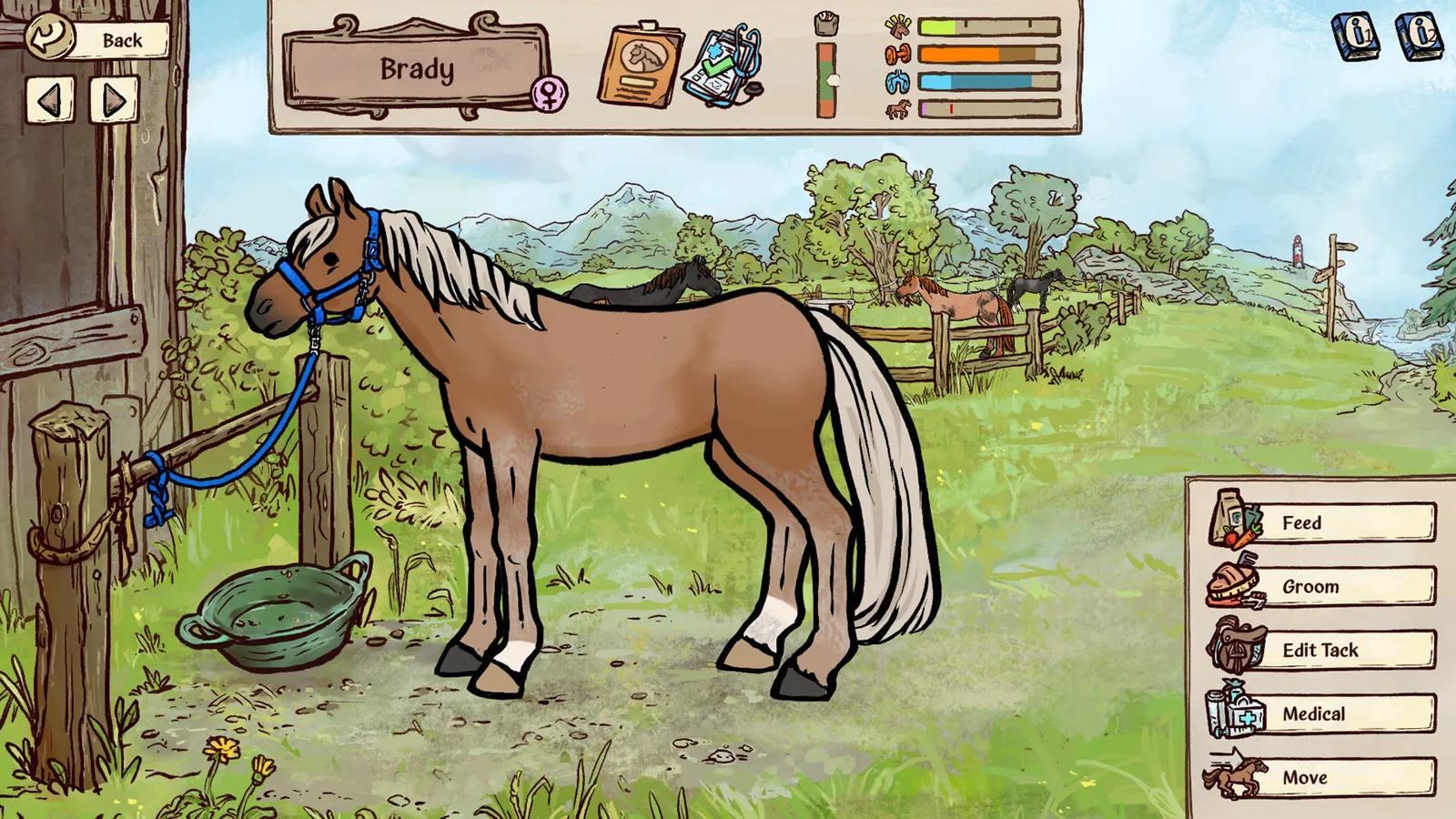
Screenshot: official Steam store page.
How traits are discovered and inherited
Public sources agree on the workflow:
- Discovery — Most traits are not visible on the purchase or ferry screen. You learn them by caring, riding, and watching reactions.
- Vet checks — Some traits can be tested at the veterinarian (exact list is in-game).
- Inheritance — Inheritable traits can come from either dam or sire. If parents carry opposing traits (Sure Footed vs Injury Prone), only one can pass to a foal.
- Non-genetic quirks — Behavior traits still affect daily play even when they do not pass to offspring.
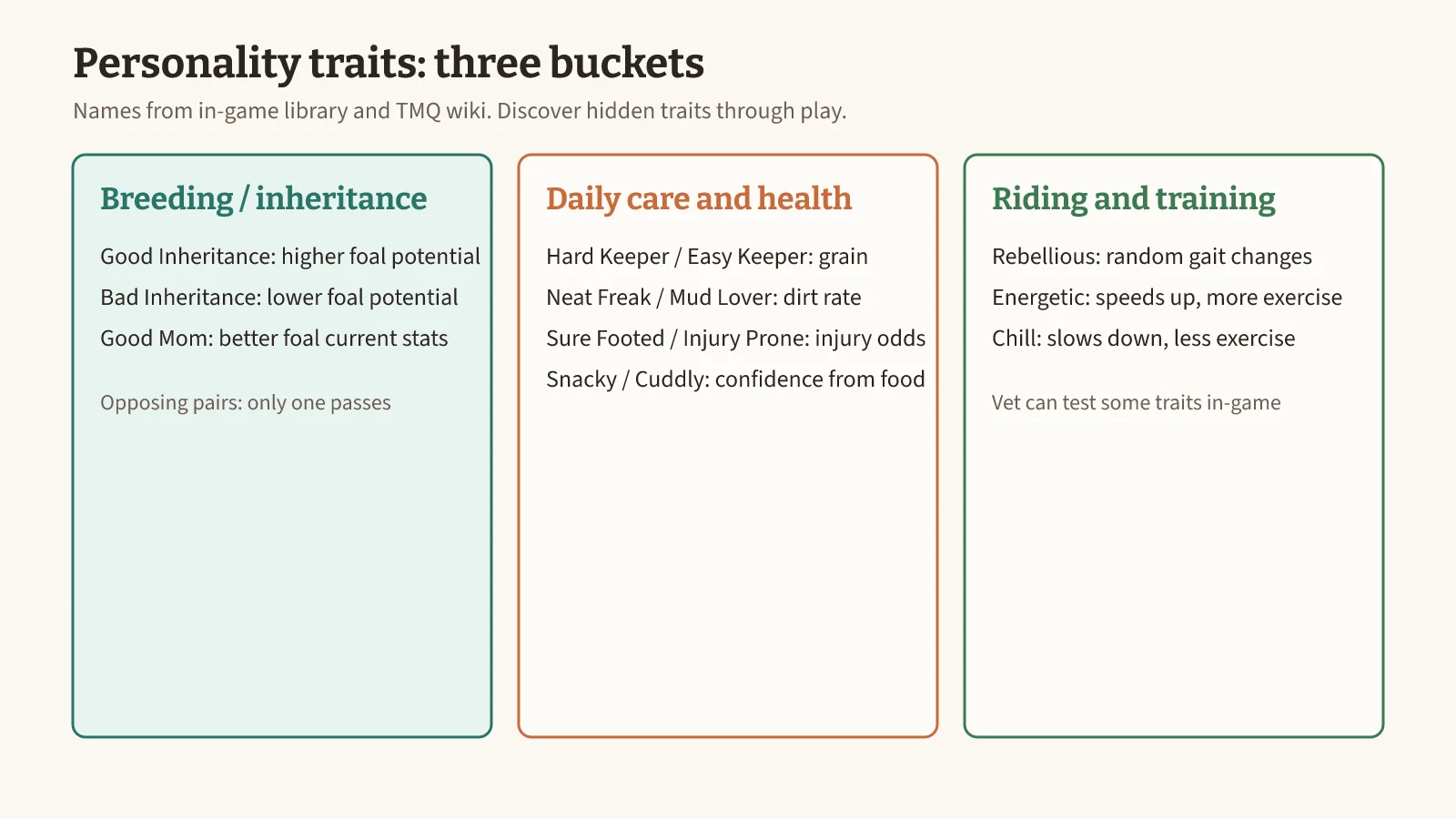
Trait quick reference
Use this table for planning care, training, and breeding pairs. Wording is paraphrased from community sources, not copied from the game files.
| Trait | Category | Reported effect | Care / training impact | Breeding notes |
|---|---|---|---|---|
| Good Inheritance | Breeding | Raises foal potential ceiling | — | Highly desirable on both parents when stacking stats |
| Bad Inheritance | Breeding | Lowers foal potential | — | Avoid pairing with Good Inheritance on the same foal roll |
| Good Mom | Breeding | Boosts foal current confidence, strength, endurance (not potential) | — | Strong on broodmares; does not replace Good Inheritance |
| Hard Keeper | Care | Needs more grain | Higher feed cost; grooms help once trained (/farm/staff-guide/) | Can inherit if flagged inheritable |
| Easy Keeper | Care | Needs less grain | Saves money on /guides/horse-care-guide/ | Can inherit |
| Neat Freak | Care | Stays cleaner | Less brushing after pasture | Can inherit |
| Mud Lover | Care | Gets dirtier | More grooming time; worse with muddy turnout | Can inherit |
| Sure Footed | Health | Lower injury chance | Safer rough riding | Opposes Injury Prone |
| Injury Prone | Health | Higher injury chance | Vet bills spike if you ignore care | Opposes Sure Footed |
| Snacky | Bonding | Extra confidence from treats | Faster early trust; daily treat cap still applies | Usually discovered, not a breeding focus |
| Cuddly | Bonding | Extra confidence from scritches | Pairs well with manual bonding before trainers | — |
| Rebellious | Riding | Random gait changes even at full confidence | Harder license courses; read /guides/controls-and-keybindings/ | Behavior planning > breeding |
| Energetic | Riding | Biased to speed up; needs more exercise to avoid “explosive” mood | Plan /guides/training-guide/ exercise without overtraining | Opposes Chill for inheritance |
| Chill | Riding | Biased to slow down; needs less exercise | Easier for beginners; can annoy timed courses | Opposes Energetic |
Breeding traits in depth
Good Inheritance and Bad Inheritance adjust the grey potential segment on strength and endurance bars—the cap you cannot train past without better bloodlines. Developer-facing training posts and the TMQ wiki both describe potential as a breeding problem, not a ferry pick problem.
Good Mom is easy to misread: it buffs a foal’s starting current stats, not the genetic ceiling. Pair a Good Mom mare with a Good Inheritance stallion when you want foals that feel usable early and grow farther later.
When planning pairs in the breeding station:
- Stack Good Inheritance on at least one parent before you chase coat colors.
- Avoid pairing Injury Prone with reckless competition horses unless you budget vet time.
- Check Hard Keeper on both parents unless you want expensive foals.
Care and barn traits
Hard Keeper and Easy Keeper change grain portions on the individual care screen while hay stays group-based (see /guides/horse-care-guide/). Community staff tables note trained grooms feed appropriate grain—useful when multiple Hard Keepers share a stable group.
Neat Freak vs Mud Lover interacts with pasture gates from /farm/building-upgrade-order/. Mud Lover is not a failure state; it is a time tax. Assign grooms or accept more brush sessions before /competitions/medium-show-jumping-guide/ days.
Sure Footed and Injury Prone shift how forgiving falls and heavy jump schedules are. They do not replace grooming—Steam’s store copy still warns that skipped hoof care risks abscesses independent of traits.
Riding and training traits
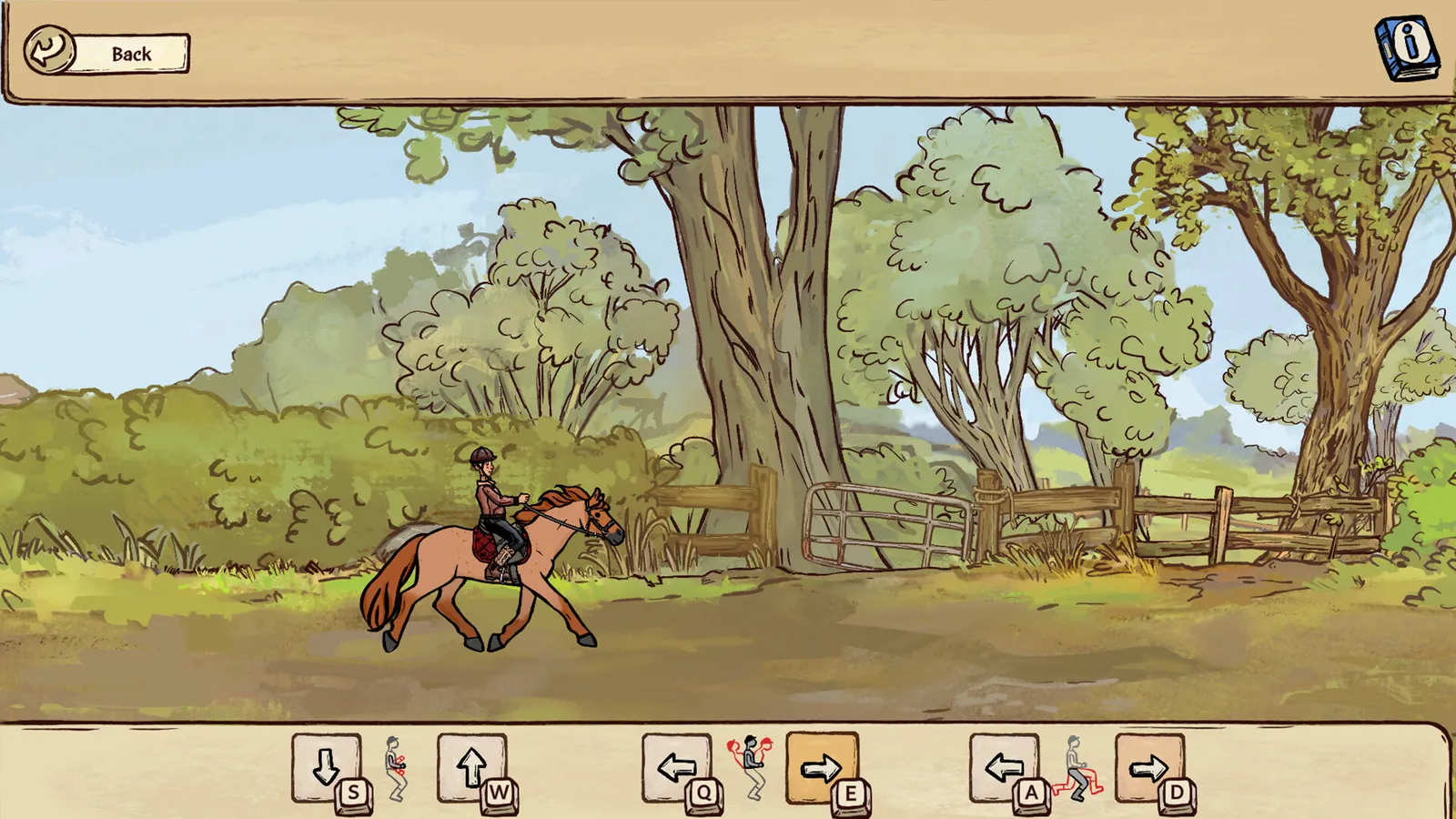
Confidence controls automatic gait changes when it drops below 100%. Rebellious, Energetic, and Chill add noise even when confidence is full:
- Rebellious — Random shifts; practice counter-taps explained in controls guide.
- Energetic — Expect forward-arrow prompts more often; schedule extra exercise (walking counts) before hard arena days.
- Chill — Back-arrow prompts; can hurt tight competition timers but helps nervous riders learn.
These traits stack with lesson income and boarder schooling requirements from /farm/boarders-and-lessons/—a Chill horse might miss lesson time windows if it slows too often.
Traits not listed here
The game may ship additional quirks in the library book that community wikis have not cataloged yet. If you encounter a labeled trait absent from this table, note the exact in-game spelling and compare to Traits and Quirks before editing wikis.
Not verified: complete inheritable flag per trait; exact percentages for injury or grain modifiers; whether hidden starter traits skew toward or away from Good Inheritance.
Sources and verification
Compiled 2026-11-05 from the TMQ Horse Game Database — Horses of Hoofprint Bay and grindnstrat guide. Items marked “reported” come from community guides and were not independently confirmed in-game.
In-game authority: library book Traits and Quirks ( cited by TMQ ) supersedes this fan page if text diverges.
FAQ
How do you discover traits in Hoofprint Bay?
Which traits affect breeding?
Do starter mares have different traits?
What is the difference between Rebellious and Energetic?
Can traits change over time?
Where do Snacky and Cuddly matter?
Related Articles
competitions
Caprilli Guide — Horses of Hoofprint Bay
Caprilli in Horses of Hoofprint Bay: what the test checks, how to unlock and enter, scoring basics, and prep low-stat horses before show jumping.
competitions
Medium Show Jumping Guide — Horses of Hoofprint Bay
Win Novice (medium) show jumping in Horses of Hoofprint Bay: prep checklist, jump assist limits, strength training, and timing fixes for the post-Beginner wall.
competitions
Show Jumping Guide — Horses of Hoofprint Bay
Show jumping in Horses of Hoofprint Bay: town entry, licenses, levels, jump timing, strength tips, and common faults—clear Beginner before chasing Novice.
Was this helpful?
Thanks for the feedback!